
Getting a mortgage in Tustin
Tustin is two cities on one map. There is the older one — Old Town, the tract neighborhoods, houses on their own lots that finance like the county around them — and there is the new one being built on the former Marine Corps air station, where the seller is a builder and the house you are buying may not exist yet. The second one is what makes financing here specific, and it is where most of the mistakes get made.
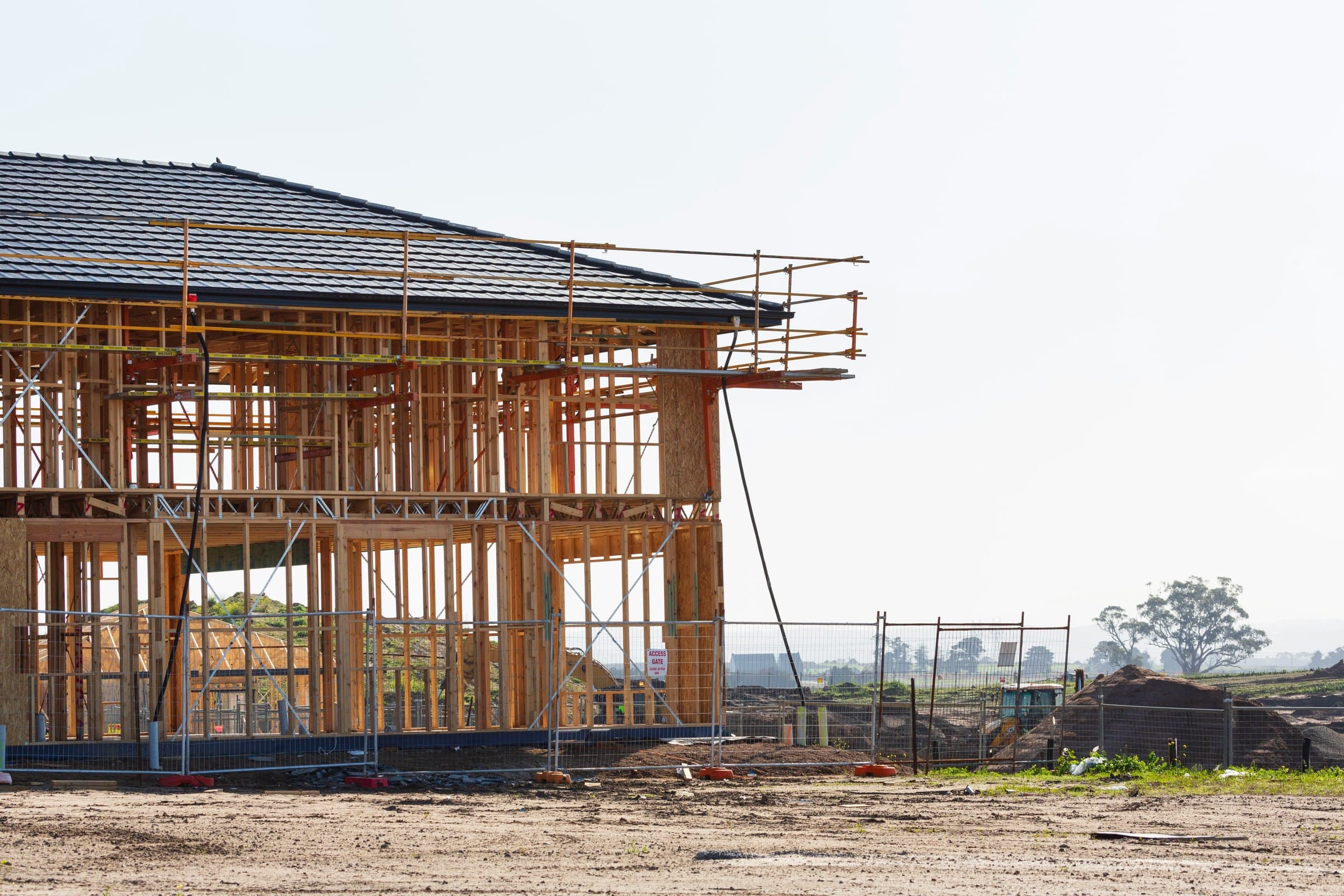
A house that does not exist yet — the file this page is about.
New construction
What makes a Tustin mortgage different?
Because much of what is new here is being built on the old air station, and a new-construction purchase is a different file from a resale. The seller is a builder with its own lender and its own incentives, the appraisal has to value a house that barely exists yet, and the credits on the contract are capped by guidelines.
| The file | A resale | A new build |
|---|---|---|
| The seller | A homeowner, out of the picture once the contract is signed. | A builder, in the picture until the house is finished. |
| The lender | Whoever you choose. | Often the builder's own, with a credit tied to using it. |
| The appraisal | The house as it stands, against nearby sales. | The plans first, the finished house later — often against the builder's own earlier closings. |
| The credits | Whatever the seller agrees to, inside the guideline cap. | Written into the contract by the builder, read by the lender under the same cap. |
| The closing date | A date the two of you agree on. | A construction schedule you do not control, against a rate lock with a shelf life. |
The city's own account of the site is worth a sentence. The air station covered nearly sixteen hundred acres, flew for more than fifty years, and closed in the late nineties; the city adopted a reuse plan and expects the build-out of what it calls Tustin Legacy to run twenty-plus years. Neighborhoods, parks, a school district's worth of children and a retail district have already gone in, and more is coming. That is where the new-construction files come from.
A resale file has a seller who wants the highest price and is otherwise out of the picture once the contract is signed. A new-construction file has a seller who also builds the house, may also own the lender it is steering you toward, sets the closing date by a construction schedule you do not control, and writes credits into the contract that a lender has to read under its own rules. None of that is sinister. All of it is different, and the sections below take the differences one at a time.
The rest of Tustin — Old Town and the neighborhoods around it — is a different page's set of questions, and the last section says which.
The credit
The builder is offering a credit if I use its lender. Is that real money?
Real, and capped. Guidelines treat a builder's credit as a contribution from a party with a stake in the sale, and they limit it to a share of the price that depends on your down payment. It can pay closing costs and prepaids. It cannot be your down payment. Anything over the cap comes off the price.
Above the cap, the credit is treated as a reduction in the price for lending purposes rather than as money toward your costs. The steps themselves are the guide's and are not retyped here.
The guide's term is an interested-party contribution: money toward the buyer's costs from anyone with a stake in the sale closing at the highest price — the seller, the builder or developer, the agents, and anyone affiliated with them. A builder's credit is squarely that, whether it is labelled an incentive, a closing-cost credit, or a design-center allowance applied at closing.
Two rules follow. The credit can be applied to closing costs and to prepaid items — the interest, taxes and insurance collected at closing — and to a limited stretch of association dues. It cannot be used as your down payment, cannot stand in for the reserves a lender wants to see after closing, and cannot satisfy the minimum the guide expects to come from you.
And the credit is capped at a share of the price, with the share rising as your down payment does — a small down payment allows the smallest credit, a large one the largest. Anything above the cap is treated as a concession on the price: the lender subtracts it from the sale price before working out how much it will lend, which is a polite way of saying the excess evaporates. The figure beside this is the shape of it, without the numbers, because the numbers are the guide's to change.
Their lender or yours
Do I have to use the builder's lender?
No, and the honest comparison is the whole credit against the whole loan. A credit that only exists if you use the builder's lender is part of that lender's price, so the question is what the same loan costs elsewhere once the credit is netted out. Sometimes the builder's deal wins. It should have to.
- A credit that exists only with this lender
- One rate sheet, one set of fees
- Built around the builder's schedule
- Knows the development — as does anyone who has closed there
- The same credit netted against the loan's real cost
- Rates and fees from the lenders who want the file
- A pre-approval you can take anywhere
- A lock and an extension policy you have read
Run it as arithmetic and nothing else. Take the builder's lender's full offer — the rate, the fees, the credit — and the best open offer for the same loan, and compare the all-in cost over the years you actually expect to hold the house. A credit that looks large at closing can be small next to a rate that is a little worse for a long time, and sometimes it is the other way round.
What the comparison needs is a real second offer, which means a real pre-approval from someone who is not the builder — read income documents, pulled credit, a letter that would survive the builder's own scrutiny. That is what I do, and it costs you nothing to have it in hand while you decide. The builder's sales office will tell you its lender knows the development; that is true, and it is also true of any lender who has closed there before.
One thing the arithmetic does not capture: timing. A builder's lender is built around the builder's schedule, and an outside lender has to match it. That is a real consideration, and it is the next section.
The appraisal
How does an appraisal work on a home that isn't finished?
From the plans and the builder's specifications, then from an inspection when it is done. The comparable sales are often the builder's own earlier closings in the same development, which is convenient and circular at once. A lender lends against the lesser of the contract price and that value, so the builder's price is not automatically the number.
- Contract signed
- Appraisal from plans
- Construction
- Final inspection
- Funding
The order of operations on a build is the thing to understand. The contract is signed months before the house is finished. The appraisal is written from the plans, then confirmed against the finished house. The loan cannot fund until the house is done, and the lender's commitment — the rate you were promised — has a shelf life. A lock that runs out before the certificate of occupancy arrives is the most common way a new-construction file gets expensive, and it is a scheduling problem, not a credit problem.
So the questions to ask before signing are about time: what the builder's realistic completion date is, how long the lender will hold the rate, what an extension costs, and who pays if the build runs long. Ask them of both lenders, the builder's and the outside one, and put the answers side by side with the credit.
Last, the tax bill. The city says plainly that the infrastructure at Tustin Legacy is funded in part by assessment districts, which means a special tax on the parcel that a lender counts in the monthly payment the same way it counts dues. The Irvine page's villages section explains how that line works and why it changes the number you are shopping to; here, the practical step is to ask the builder for the parcel's expected tax figure and put the whole of it into the arithmetic.
Old Town and the rest
What about the rest of Tustin?
It finances like the county around it. Old Town and the neighborhoods north of it are older houses on their own lots, where the questions are the ones the Costa Mesa page covers — additions, permits, the conforming line. The attached condos and townhomes raise the association question the Irvine page covers. Both are a link away.
The older city is where the additions are, and an appraiser counts only the square footage the permit history supports. Pull the record while you are still shopping; the Costa Mesa page says why, and what happens to the gap when an appraisal lands short.
The attached units — and there are many, in both the old city and the new — put the association into the file alongside you. The Irvine page's figure on which projects get a waived review and which get the full one is the thing to read before writing on one, and the new developments at the air station are a case where the association is new enough that its budget and reserves are themselves the question.
If a friend were buying in Tustin, I'd tell them not to overlook it when comparing different parts of Orange County. You can get a great central location with easy access to Irvine, Costa Mesa, and the rest of OC, while often getting more for your money than you would closer to the coast. I'd also compare older Tustin neighborhoods with newer communities like Tustin Legacy, because the homes, HOAs, and overall feel can be very different.
Tustin questions I get asked
- Can the builder's credit be my down payment?
- No. Guidelines allow a builder's credit to go toward closing costs, prepaid items and a limited stretch of association dues, and not toward the down payment, the reserves a lender wants to see, or the minimum contribution expected from you. The down payment has to be yours.
- Is there a limit on how big the credit can be?
- Yes — a share of the price that rises with your down payment, set by the guide and changed by the guide. Anything above the cap is treated as a reduction in the price for lending purposes, which means it stops being money toward your costs. I will tell you where the line is for your file.
- Do I lose the credit if I use my own lender?
- Often the credit is conditional on the builder's lender, and that is the point of it. The question is not whether you lose it but what the same loan costs elsewhere once the credit is netted out. Bring both offers and compare the all-in cost over the years you expect to own the house.
- What happens if the house isn't finished when my rate lock ends?
- The lock is extended, at a cost, or it expires and the loan is repriced. This is the most common way a new-construction purchase gets expensive, and it is a scheduling question to settle before signing: the realistic completion date, the lock length, the extension cost, and who pays if the build runs long.
- Does Tustin Legacy have Mello-Roos?
- The city says assessment districts are among the sources funding the infrastructure there, which is the mechanism buyers call Mello-Roos. A lender counts that line in the monthly payment the same way it counts dues. Ask the builder for the parcel's expected tax figure and put all of it in the arithmetic.
- Do you actually work in Tustin?
- Yes — Tustin is one of the areas I work, a short drive from the office, and new-construction files are the reason this page reads the way it does. Bring me the builder's offer and I can put a real second one beside it, usually within a day or two.
Pages this one hands off to, for the parts of the file it only names:
- Irvine mortgage brokerthe villages section explains the special-tax line on a new-development parcel, and the review section covers a brand-new association.
- Costa Mesa mortgage brokerfor the older city — additions, permit history, and which side of the conforming line a house lands on.
- Home purchase loansconventional, FHA and VA, and where each one fits — the loan that any builder's credit has to sit inside.
- Orange County jumbo loansif the new house's price puts the loan above the county limit, what changes across that line.
Where the guideline and city material came from
What a builder's credit can do is the investor's rule, read from its guide with the percentages left there; what the air station was and how its build-out is funded is the City's own account. Builder marketing is not a source on this page. Check it against them rather than against me.
- Fannie Mae's Selling Guide defines interested-party contributions as contributions from parties with a vested interest in the transaction — including the seller, the builder or developer, the agents, and their affiliates — permits them toward closing costs and prepaids but not the down payment, reserves, or the minimum borrower contribution, caps them at a share of the price by loan-to-value band, and treats any excess as a sales concession deducted from the price.Read at the source on
- The City of Tustin states that the former Marine Corps Air Station Tustin covered nearly sixteen hundred acres, was commissioned during the Second World War, operated for more than fifty years, and closed in the summer of the late nineties; that a reuse plan was adopted and later became the MCAS Tustin Specific Plan; and that the ultimate build-out of the Tustin Legacy project is expected over twenty-plus years.Read at the source on
- In its Tustin Legacy FAQs, the City of Tustin states that it is addressing infrastructure costs — roads, storm drains and utilities — through multiple funding sources including land sales proceeds and assessment districts.Read at the source on
Bring me the builder's offer, and I'll put a real one beside it.
The credit, the rate, the fees, the completion date, and the parcel's tax figure — that is the whole comparison, and it takes a day or two to run properly. If the builder's lender wins it, I will say so. If it does not, you will know by how much.
- Call or text
- (949) 744-5302
- Office
- 17911 Von Karman Ave, Suite 400
Irvine, CA 92614